

Opening an agency in Japan in 2026: Requirements, permits, and costs.
 Japanese

 Updated on January 19
 Verified by GLA Experts
 Follow GLA on


content
- 1. Why should you open an agency in Japan?
- 2. Top 5 most promising agency sectors when establishing a company in Japan
- 3. General requirements for opening an agency in Japan
- 4. How does GLA support businesses in setting up agency companies in Japan?
- 5. Frequently Asked Questions about Running an Agency in Japan

 Follow GLA on

By the end of 2025, total foreign direct investment in Japan is projected to reach 61,2 trillion yen, a 14,8% increase year-on-year and the highest level ever recorded. The Japanese government aims to raise this figure to 120 trillion yen by 2030, according to the plan. Data from the Ministry of Finance and the Bank of Japan.
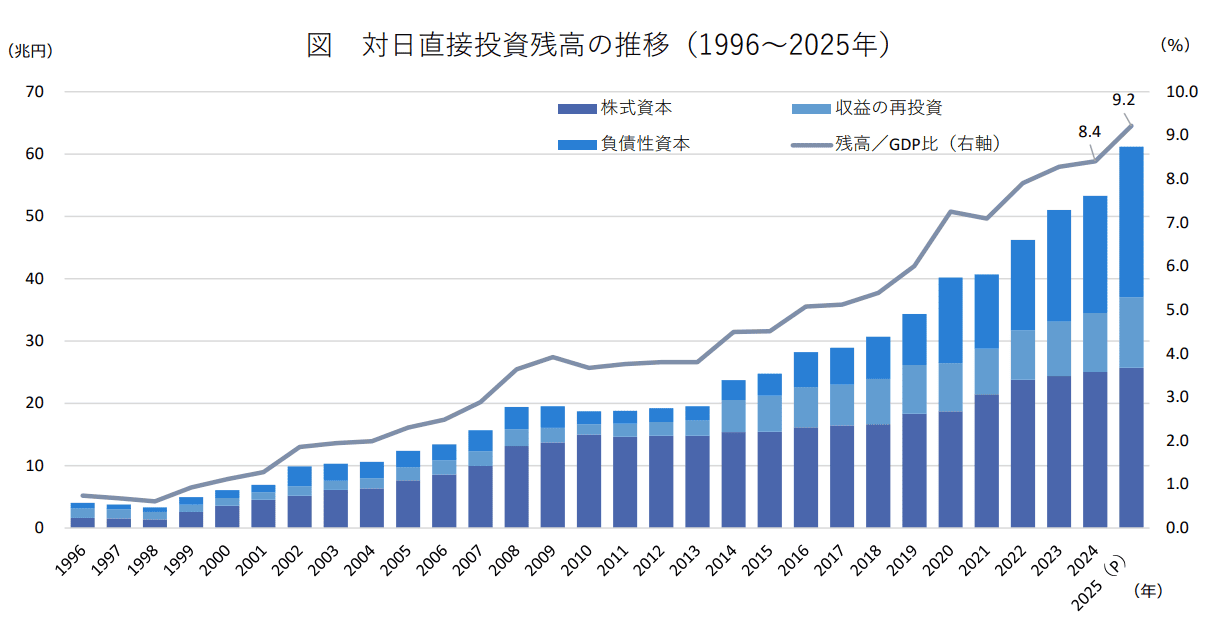
This influx of capital and a series of investment-attracting policies are opening up many opportunities for foreign businesses. Among these, agency business models are particularly noteworthy, as they typically require less fixed capital and are easily scalable.
However, not every agency field is suitable to start in. To run a successful and legal business, companies need to choose the right, promising field. set up company in japan In accordance with the law, and meeting all licensing and operational requirements under Japanese law.
In this article, GLA experts will provide a comprehensive overview of:
- Top 5 promising agency business sectors in Japan for foreign companies.
- Analyzing market opportunities, popular business models, and advantages for Vietnamese businesses.
- Legal requirements to consider when establishing and operating an agency in Japan.
- These factors help businesses choose the right field and develop a market entry strategy.
Through this process, businesses can gain a clear understanding of the potential of each industry, identify suitable strategies, and prepare a solid foundation for long-term business expansion in Japan.
1. Why should you open an agency in Japan?
Japan is one of the potential markets for developing the agency model due to its large economic size, increasing demand for business services, and numerous policies encouraging foreign investment.
In particular, sectors such as marketing, information technology (IT), human resources, business consulting, and tourism are in high demand, opening up many opportunities for businesses looking to expand their operations in this market.
Here are some reasons why Japan is an attractive destination for establishing an agency.
The large scale of the economy creates a stable demand for agency services.
Japan is currently the world's fourth-largest economy with a consumer market of over 120 million people and stable purchasing power.
According to data from the Japanese Cabinet Office, nominal GDP in 2025 is projected to reach approximately 662,79 trillion yen, a 4,5% increase from the previous year and marking the fifth consecutive year of growth.
The large scale of the economy means that businesses in Japan always have a need for support services such as marketing, management consulting, human resource recruitment, software development, digital transformation, and tourism services.
This foundation gives the agency model more opportunities for long-term growth instead of just following short-term trends.
The Japanese government encourages foreign businesses to invest.
Japan not only has a transparent business environment but also has many support programs for foreign investors.
Through the Japan External Trade Organization (JETRO) and the Investment and Business Support Center (IBSC) system, businesses can access consulting services on company formation, investment, visas, and partner networking right from the initial stages.

These policies help reduce barriers to market entry and create favorable conditions for agencies providing consulting and support services to international businesses to expand their operations in Japan.
The demand for agency services has surged due to digital transformation and a shortage of skilled personnel.
One of the biggest drivers behind the growth of the agency model in Japan is the strong digital transformation process coupled with a persistent labor shortage.
According to Japan's Ministry of Health, Labour and Welfare (MHLW), the number of job openings has consistently exceeded the number of job seekers for many years, reflecting the high demand for recruitment from businesses. In the information technology sector alone, Japan's Ministry of Economy, Trade and Industry (METI) forecasts a potential shortage of approximately 790.000 IT professionals by 2030.
In addition, online advertising budgets are also increasing rapidly. According to Dentsu (2025), internet advertising spending in Japan will for the first time account for more than 50% of total advertising spending in the entire market. These trends create significant demand for agencies in the fields of marketing and digital marketing, software development and IT outsourcing, recruitment, and digital transformation consulting.
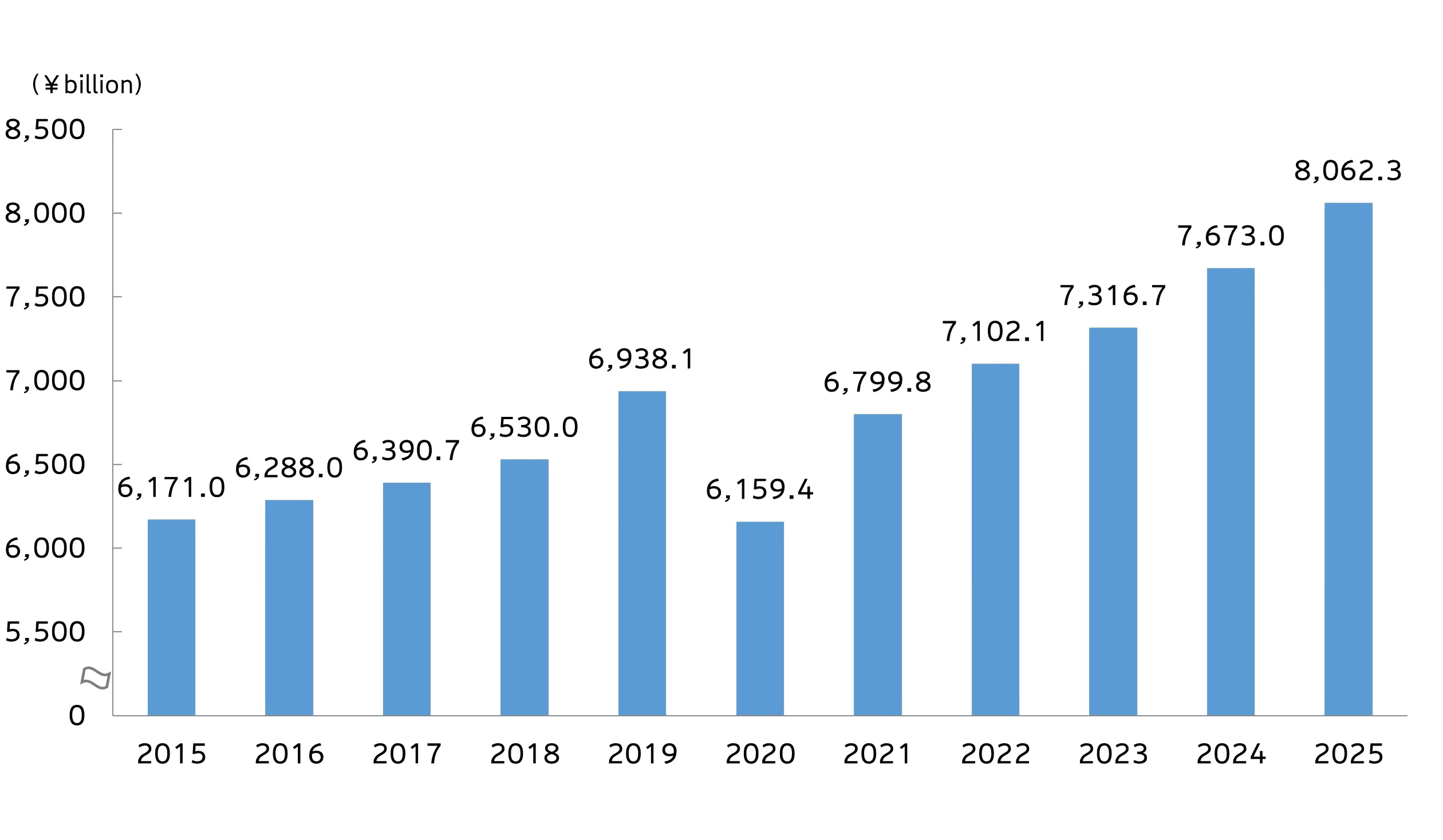
Advertising costs in Japan (Source: Dentsu Report)
The tourism industry is growing, creating opportunities for service agencies.
Following the post-pandemic recovery period, Japan's tourism industry continues to record strong growth.
According to the Japan National Tourism Organization (JNTO), the number of international visitors to Japan has consistently set new records in recent years. Vietnam is one of the fastest-growing source markets in Southeast Asia.
The development of the tourism industry not only creates opportunities for travel businesses but also boosts demand for many related services such as:
- Tourism marketing.
- Travel agency and tour operator.
- Translation and tour guide services.
- Event organization and MICE.
- Investment consulting in the tourism sector.
This is a potential market for agencies looking to target international clients and businesses operating in the tourism sector.
Vietnamese businesses have many advantages when opening an agency in Japan.
Vietnamese businesses have significant advantages when developing operations in Japan. According to the Japan Immigration Bureau (2025), by the end of 2025, the Vietnamese community in Japan will... reached 681.100 peopleThey rank second among foreign nationalities. This group represents both a source of human resources and a potential customer and partner group for newly established businesses.
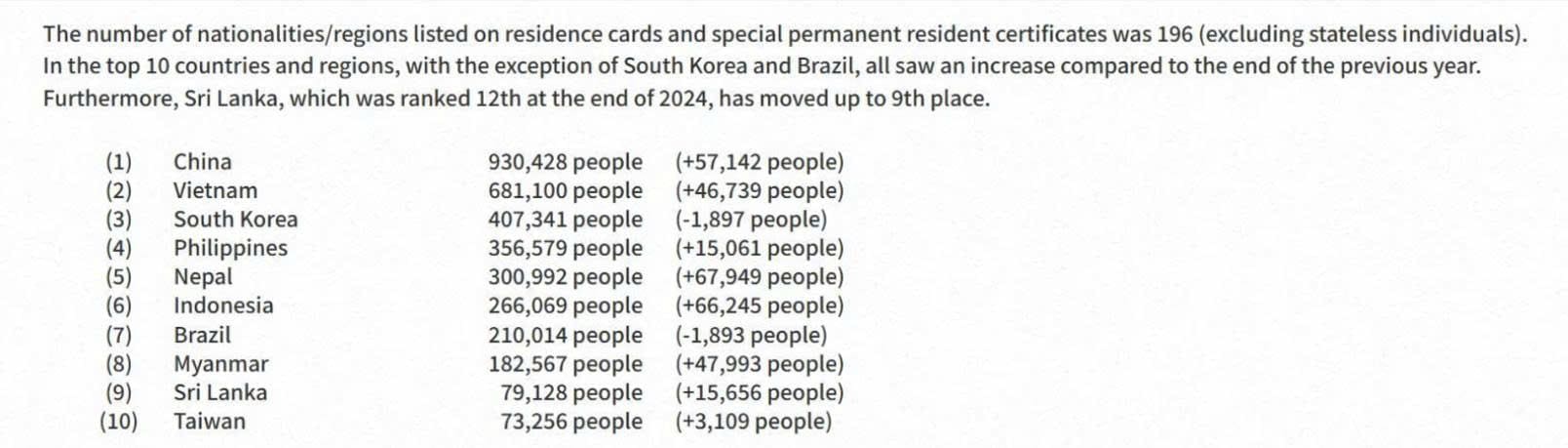
In addition, Vietnamese businesses have many advantages such as:
- Understanding the culture and needs of both the Vietnamese and Japanese markets.
- It facilitates easy connection between customers, partners, and human resources in both countries.
- There are opportunities to develop specialized services for Vietnamese businesses and the Vietnamese community in Japan.
These advantages help businesses shorten the time to market entry and create a favorable foundation for expanding agency business operations in Japan.
2. Top 5 most promising agency sectors when establishing a company in Japan
The five most promising agency sectors in Japan are tourism, IT, marketing, human resources, and business consulting. Each sector has different levels of potential, legal barriers, and starting capital. To help businesses quickly compare and choose a direction that suits their resources, GLA's business consultants have compiled the table below.
| Criteria | Travel & Tourism | IT / Software | Marketing & Treatment | Personnel | Business consulting |
| Specialized licenses are required. | Yes. Register for tourism business. | No | No | Yes. A paid Job Placement License or a Labor Dispatch License. | There is no general licensing requirement, but licensed professionals are needed to perform these services (administrative services, legal services, accounting, tax consulting). |
| Industry-specific minimum capital/assets | Basic assets + security deposit depending on the type of registration (the required amount increases progressively). | No specific requirements | No specific requirements | Net assets ≥ 5.000.000 JPY/office + cash ≥ 1.500.000 JPY | No specific requirements (unless there are personnel holding professional certifications who need to meet individual professional practice requirements). |
| Request for specialized personnel | Mandatory appointment of a Travel Operations Manager | Not mandatory (except for visa requirements for engineers) | Optional | Training is mandatory for job placement agents. | Collaboration with certified professionals (administrative clerks/lawyers/accountants/tax consultants) is necessary if expanding legal and financial services. |
| Best suited for | Travel agencies wishing to open branches should have experience in operating tours. | Software/outsourcing company, engineer looking to start a business. | Media agency and highly skilled freelancer looking to expand. | An experienced HR company, willing to invest long-term. | Consultant, former investment/legal professional looking to start a service business. |
| A distinct advantage for Vietnamese businesses. | Understanding the preferences of Vietnamese tourists and capitalizing on the growing trend of Vietnamese visitors to Japan. | Strengths include a skilled engineering workforce and experience in outsourcing to the Japanese market. | Bilingual services, connecting the Vietnamese and Japanese markets in both directions. | Vietnam Labor Network | Understanding the context, needs, and barriers faced by Vietnamese businesses when entering the Japanese market. |
2.1 Tourism and travel business in Japan
Tourism and travel is a highly promising field for agencies, but it requires a travel agency business license. This is the biggest difference compared to other agency sectors. Vietnam is a rapidly growing source market, opening up opportunities for businesses providing travel services and operating tours in Japan.
Market potential
According to data from the Japan National Tourism Organization (JNTO), released by the Vietnam National Administration of Tourism, nearly 678.500 Vietnamese tourists will visit Japan in 2025, more than double the previous year and marking the third consecutive year of record-breaking numbers.
In the first six months of 2026, the number of Vietnamese tourists continued to reach approximately 396.500, an increase of 8,7% compared to the same period, making Vietnam the 9th largest source market for Japanese tourists and the 3rd largest in Southeast Asia.
The tourism market in Japan still has much room for growth. The majority of Vietnamese tourists visiting Japan for the first time still choose the familiar itinerary of Tokyo, Mount Fuji, Kyoto, and Osaka. This presents an opportunity for businesses to develop specialized tourism products and explore new destinations.
In addition, the community of 681.100 Vietnamese people in Japan is also a target customer group for domestic tourism services and tours for visiting relatives, business trips, or a combination of study and work.
Popular business models
Depending on their development direction, businesses can choose from various business models, such as:
- Organizing and operating all-inclusive tour packages.
- Travel agency selling airline tickets, making hotel reservations, and providing other travel services.
- We provide land tour services for international groups visiting Japan.
- We provide tour guide services, transportation, and assistance for tourists.
- Engaging in specialized tourism products combined with study abroad programs, trade promotion, or labor export.
Legal requirements for conducting tourism business in Japan.
Unlike many other agency fields, businesses wishing to operate travel services in Japan need more than just a few things. Establishing a travel company in Japan Furthermore, they must obtain a travel agency business license in accordance with the Japanese Travel Agency Law (旅行業法).
According to the Japan Tourism Agency, businesses that directly organize or sell tours, arrange transportation, accommodation, and other paid tourism services must complete registration procedures before operating. Some important conditions that businesses need to meet include:
- Choosing the right type of travel business license In accordance with the scope of operation, Japan currently has five types of travel agency business registration, including first-class, second-class, third-class travel agencies, regional travel agencies, and travel agents.
- Meeting financial requirementsThis includes standard asset requirements and security deposits or contributions specific to each license type.
- Appointment of Travel Operations Manager (旅行業務取扱管理者) Each business office has the appropriate certification.
- The business location meets the regulations., serving practical purposes and qualifying for inspection by regulatory authorities when necessary.
According to GLA experts' experience in assisting with the establishment of travel companies in Japan: "A common mistake made by Vietnamese travel businesses is establishing the company first and then researching the licensing requirements. In reality, choosing the right registration category from the start optimizes deposit costs and avoids the need for mid-way upgrades."
2.2 Opening an IT/Software Company in Japan
IT and software are sectors with the most pressing needs and low barriers to entry. This industry doesn't require specialized licenses; simply establishing a company is enough to launch a project. This presents a great opportunity for Vietnamese businesses, which possess a strong workforce of engineers and experience in software outsourcing for the Japanese market.
The potential of the IT/software market in Japan.
According to the report "Survey of IT workforce supply and demandAccording to a study conducted by Japan's Ministry of Economy, Trade and Industry (METI), Japan could face a shortage of up to... Approximately 790.000 IT professionals by 2030. If labor productivity does not improve significantly, the reason stems from a declining working-age population, while the demand for digital transformation (DX), cloud computing, AI, and cybersecurity among Japanese businesses is rapidly increasing.
In addition, the growth of e-commerce has also led to a significant demand for IT services. According to the Japanese Ministry of Economy, Trade and Industry (METI, 2025)In 2024, the retail e-commerce market (B2C-EC) in Japan reached 26,1 trillion yen, while the business-to-business (B2B-EC) market reached 514,4 trillion yen.
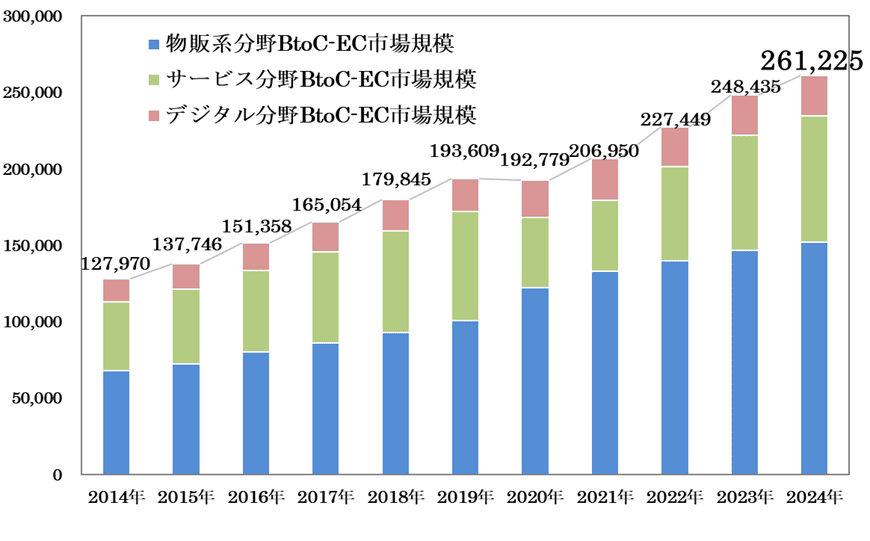
This growth has created demand for website development, store optimization on platforms like Amazon Japan and Rakuten, and cross-border sales solutions. In particular, cross-border e-commerce between Japan and other countries, including the sale of Japanese goods to Vietnam, opens up further opportunities for IT companies to support operations and system connectivity.
Beyond serving the domestic market, IT companies can also capitalize on the demand for cross-border e-commerce between Japan and international markets. For example, Japanese businesses selling products to Vietnam or other markets may need solutions for website development, order management, system integration, data management, and optimizing sales operations on international platforms such as Amazon, etc. This presents a significant opportunity for IT companies providing e-commerce solutions and cross-border operational support.
This supply-demand gap opens up huge opportunities for foreign IT companies, especially Vietnamese businesses, a country that has had a strong position in the field of software outsourcing (offshore development) for the Japanese market for more than a decade.
Opening a company directly in Japan, instead of just working remotely, allows businesses to get closer to customers, build trust, and bridge the cultural and language barriers that are major obstacles in business cooperation with Japanese companies.
Common business models when starting an IT company in Japan
When establishing an IT company in Japan, businesses can choose one or a combination of different business models depending on their resources and development goals.
- Software Outsourcing (IT Outsourcing/SES – System Engineering Service): Receiving software and system development projects from Japanese companies, implementing them using a team of engineers in Japan or in collaboration with a team in Vietnam (offshore/hybrid model).
- Develop your own SaaS/application products.: Develop and market the company's own software products, targeting the Japanese or international market.
- Digital transformation consulting (DX Consulting): To support Japanese businesses (especially SMEs) in the process of digitizing operations and integrating systems.
- IT Engineer Supply and CoordinationConnecting engineers (including foreign engineers) with Japanese projects/companies that are experiencing manpower shortages.
Legal requirements for opening an IT/software company in Japan.
A major advantage of the IT/software sector is that it doesn't require a separate specialized business license like some other sectors in Japan.
Businesses only need to follow the company formation procedures stipulated by Japanese law, including registering the business with the Legal Affairs Bureau of Japan and fulfilling all related tax and labor obligations.
However, when opening an IT company in Japan, businesses need to pay special attention to several important legal issues:
- Visa for the engineering teamForeign engineers working at the company need a visa.Engineer/Humanities/International Services or Japanese Engineer Visa as per regulations Japan Immigration Bureau (ISA)This is the most common work visa for software engineers and systems engineers. This visa is separate from the Business/Management visa for company founders/executives.
- Obligations to employeesWhen recruiting personnel (including foreign engineers), businesses must fully comply with regulations regarding labor contracts, social insurance, health insurance, and pension insurance as stipulated by Japanese labor law.
- If a business owner plans to apply for a Business - Manager visa, the business must simultaneously meet the following conditions: Japan Business Registration OfficeThe registered capital and personnel have been mentioned in the legal conditions section above in this article.
Additionally, if a business owner wishes to live and operate a company in Japan through a Business-Management Visa, the business must meet the current regulations regarding business office, investment capital, and personnel structure.
Why is IT/software the easiest industry to enter when opening an agency in Japan?
The IT/software business in Japan is considered one of the industries with lower barriers to entry due to several advantages:
- No specialized licensing barriers For businesses like tourism (travel agency registration) or human resources (employment agency license), simply registering the company allows you to start implementing the project.
- Flexible startup is possible.Businesses can start with a small team in Japan, combining resources from Vietnam in the initial phase, before expanding and recruiting more local staff.
- Authentic, long-term market demandUnlike industries dependent on consumption cycles or trends, the IT workforce shortage in Japan is projected to last at least until 2030, according to METI data, ensuring stable market demand in the medium to long term.
This is also why IT/software is often the preferred "entry point" for many Vietnamese businesses when first expanding into the Japanese market, before considering investing in sectors requiring more complex licensing such as tourism or human resources.
2.3 Marketing, Advertising, and Digital Agency Business in Japan
Marketing and digital agencies are benefiting from the shift of advertising budgets to digital. The industry doesn't require specialized licenses, but is governed by two legal frameworks regarding advertising content. This presents an opportunity for Vietnamese agencies with the advantage of creative personnel and experience serving international clients.
In recent years, the Japanese advertising market has witnessed a clear shift from traditional media channels to digital platforms. As consumer behavior changes and users spend more time on the internet, social media, and online platforms, Japanese businesses are compelled to seek digital marketing partners capable of helping them reach customers more effectively.
This presents an opportunity for businesses looking to establish a Marketing Agency in Japan, especially Vietnamese agencies with advantages in creative personnel, multi-channel implementation capabilities, and experience serving international clients.
Market potential for Marketing and Digital Agencies in Japan
According to the report "Advertising costs in Japan in 2025" According to Dentsu, a leading Japanese advertising group, total advertising spending in Japan reached... 8,0623 trillion yen, continued its growth for the fourth consecutive year and set a new record high.
Remarkable, Internet advertising spending reached 4,0459 trillion yen., up 10,8% year-on-year and for the first time accounting for over 50% of the total advertising budget of the entire market.
This figure also exceeds the combined cost of four traditional media outlets: newspapers, magazines, radio, and television.
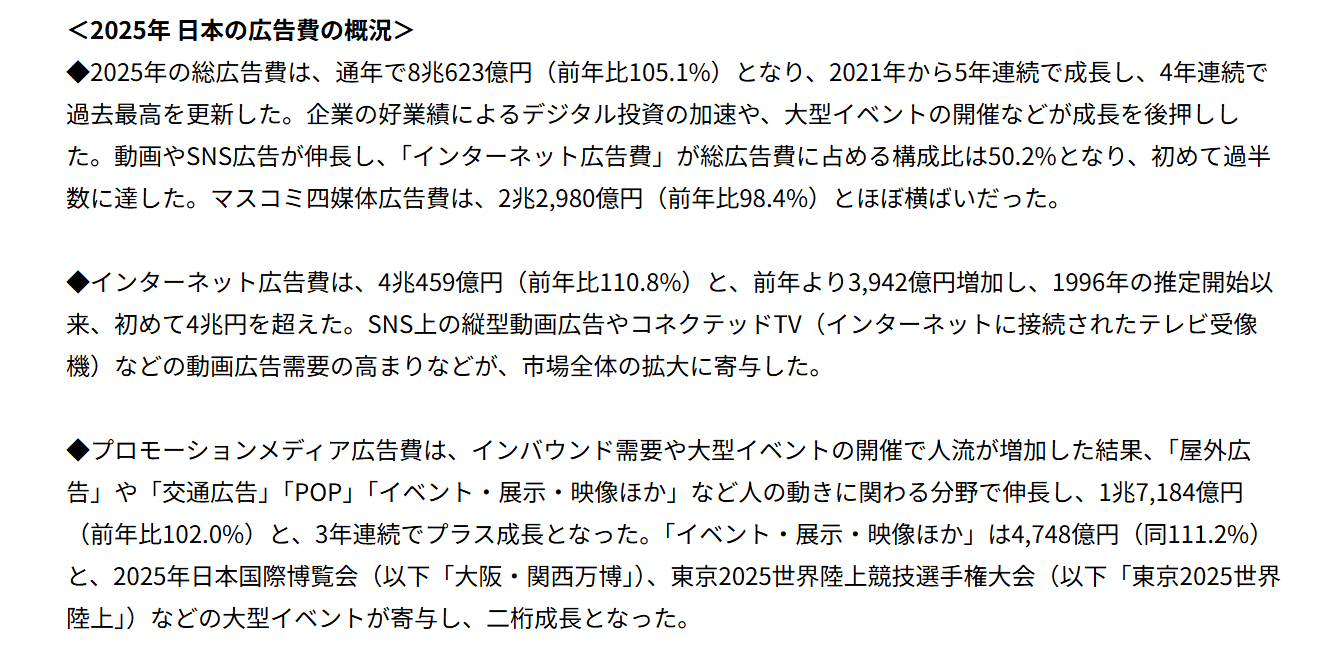
Advertising costs in Japan are rising (Source: Report from Dentsu)
This shift reflects a key trend: Japanese businesses are increasingly prioritizing digital marketing channels to reach customers, measure effectiveness, and optimize advertising costs.
In particular, small and medium-sized enterprises (SMEs) in Japan have a great need to find partners who can provide support:
- Develop an online marketing strategy.
- Increase your visibility in search engines.
- Reach customers through social media.
- Building a brand in the digital environment.
Besides domestic demand, the increase in cross-border business activity also creates more opportunities for international digital agencies. Japanese businesses expanding into Southeast Asian markets need partners who understand the local market, while foreign businesses (including those in Vietnam) wanting to reach Japanese customers also need agencies capable of bridging the gap in language, culture, and consumer behavior.
Popular business models
When establishing a Marketing Agency in Japan, businesses can implement various service models depending on their strengths and development direction, including:
- SEO / SEMSearch engine optimization (SEO) and keyword advertising for Japanese businesses or foreign businesses wanting to reach Japanese consumers.
- Optimizing display using AI tools (GEO)Optimizing content so that the brand is mentioned and cited in AI search engine results is crucial. As users increasingly search using AI assistants, the demand for this service is rapidly growing and represents a significant area of growth.
- Social Media MarketingContent management and advertising on social media platforms are areas experiencing double-digit growth, according to the Dentsu figures mentioned above.
- Multilingual content productionVideos, images, and articles serving both the Japanese domestic market and cross-border communication needs (inbound tourism, trade promotion).
- Multilingual advertising and PR: To assist foreign businesses in building their brand image when entering the Japanese market, or vice versa.
Legal requirements for opening a Marketing Agency in Japan
Marketing - Digital is also a field No specialized business license required. To begin operations, businesses only need to complete the standard company registration procedures. However, there are two important legal frameworks governing advertising content that agencies must understand to avoid violations when providing services to clients:
- Law on Prevention of Illicit Labeling and Gifting (Act against Unjustifiable Premiums and Misleading RepresentationsThis law is administered by the Japanese Consumer Affairs Agency. It strictly prohibits exaggerated or misleading advertising regarding product quality/price ("misleading advertising"), and limits the value of promotional gifts included with products. This is a regulation that agencies need to pay particular attention to when advertising in sensitive sectors such as cosmetics, dietary supplements, and medical/beauty services.
- Law on Protection of Personal Information (Privacy Policy), is overseen by the Personal Information Protection Commission. When an agency collects and processes client data from its partners (email marketing, targeted advertising, CRM management), it must comply with regulations regarding the lawful collection, storage, and transfer of personal data.
Violating these two legal frameworks not only affects the clients the agency serves, but the agency itself, as the advertising entity, may also be held jointly liable. Therefore, this is a point that needs to be included in the internal content review process from the outset.
Competitive advantages for Vietnamese agencies
Compared to local Japanese agencies, Vietnamese marketing agencies have several significant advantages when entering this market:
- Bilingual, multicultural services: The ability to simultaneously serve Japanese clients looking to expand into Southeast Asia and Vietnamese/international clients seeking access to the Japanese market.
- More competitive operating costsIf a company organizes its content production and design team using a hybrid model (partially in Japan, partially in Vietnam), it can optimize costs compared to a purely Japanese agency.
- Understanding Vietnamese consumer behavior: A clear advantage is serving Japanese businesses exploring the Vietnamese market, or businesses wanting to reach the community of over 630.000 Vietnamese people living in Japan.
Overall, this industry has similarly low barriers to entry to IT, but requires agencies to invest more in building portfolios, brand reputation, and networks with Japanese businesses—factors that take time to accumulate in a market that values stability and long-term security like Japan.
2.4 Business in human resources services (recruitment, labor dispatch) in Japan
Human resources services is the industry with the strictest legal requirements among the top 5, but the market demand is huge. Businesses wishing to engage in recruitment or labor dispatch must obtain specialized licenses; simply establishing a company is not sufficient. This presents a long-term opportunity for Vietnamese businesses with a network of candidates in Vietnam, and for human resources companies in Japan, it can become a long-term business opportunity if proper preparation is made from the outset.
The potential of the human resources services market in Japan.
According to the report "Overall job placement situationAccording to data periodically released by the Japanese Ministry of Health, Labour and Welfare (MHLW), the labor supply-demand ratio (有効求人倍率 - the ratio of job openings to job seekers) in Japan has remained above 1,0 for many consecutive years.

This means that the number of job openings is consistently higher than the number of job seekers, reflecting a persistent labor shortage across the market.
This situation is particularly evident in manufacturing, construction, nursing care, information technology, specialized engineering, and industries employing skilled workers (Tokutei Ginou).
With Japan's population continuing to age and its domestic workforce shrinking, the demand for foreign workers is projected to continue increasing in the long term.
The groups of foreign personnel with high recruitment demand in Japan include:
- Specified Skilled Worker (特定技能 - Tokutei Ginou)
- Thực tập sinh kỹ năng (technical training)
- Foreign engineers are eligible for the Technical - Humanities - International Professional visa category.
- Highly skilled professionals in the fields of technology, engineering, and management.
This presents a great opportunity for international recruitment agencies, especially Vietnamese businesses, as Vietnam currently has one of the largest numbers of workers living and working in Japan.
Establishing a recruitment agency in Japan not only helps businesses connect directly with Japanese employers but also creates an advantage in building recruitment, training, and support processes for employees throughout their employment.
Popular human resource business models in Japan
When opening a human resources agency in Japan, businesses can choose one or a combination of the following business models:
- Paid job placement services: Connecting candidates with businesses that need to hire, charging a service fee when the candidate is successfully hired.
- Labor dispatch: The business signs a labor contract directly with the employee, then sends them to work at the partner business (the client hiring the labor).
- Headhunting/Senior Recruitment: Searching for and introducing management personnel and experts to Japanese companies or foreign companies in Japan.
- Human resources consulting for foreign companies newly entering Japan.: Assisting in developing human resource policies and initial recruitment for newly established foreign companies (including Vietnamese businesses) in Japan.
Legal requirements for opening a human resources company in Japan.
This is the biggest difference in the HR industry: businesses Simply registering a company is not enough.. According to Employment Stability Act (職業安定法) and procedural guidelines published by the Japanese Ministry of Health, Labour and Welfare in "Handbook of procedures for obtaining a business license for employment agencies."Businesses wishing to operate paid job placement services must obtain prior permission, subject to the following main conditions:
- Basic asset requirementsminimum net assets (total assets minus total liabilities) 5.000.000 JPY per office.
- Cash/Deposit Request: businesses must own at least 1.500.000 JPY in cash or bank deposits in the company's name. (plus 600.000 JPY for each additional office).
- Mandatory appointment of a Job Placement Officer (Job referral officer), a person who has completed the mandatory training course organized by the designated agency, with a minimum ratio of 1 officer for every 50 employees engaged in job referral services.
- Office requirementsPrivacy must be ensured during candidate/client interviews, and clear policies for managing personal information must be in place.
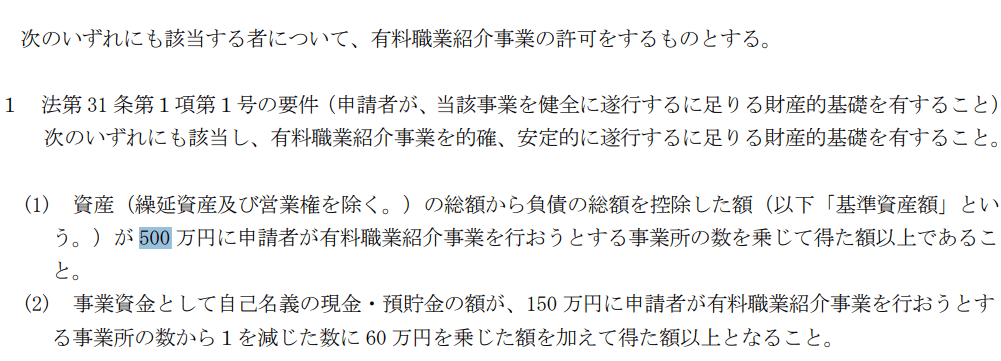
Minimum net assets of 5.000.000 JPY per office.
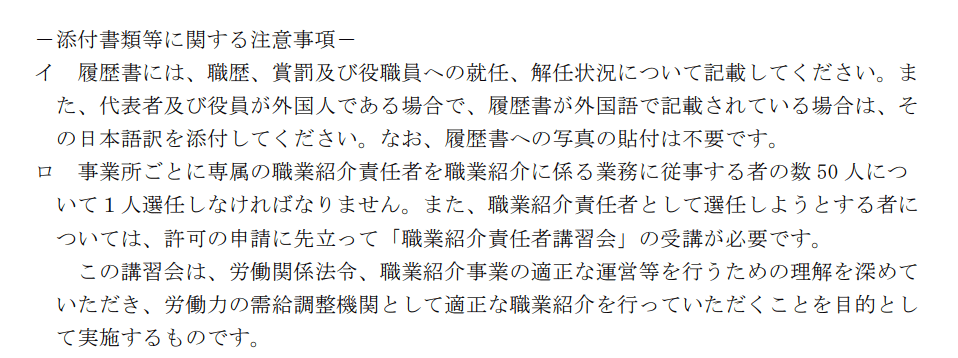
Job placement officer: 1 person/50 operational staff
Distinguishing between employment referral permits and labor dispatch permits.
Businesses need to clearly define their business model before implementation because these two activities require two completely different types of licenses.
| Type | Licenses need to be registered. | Characteristics |
| Job introduction (職業紹介) | Fee-based Job Placement Business License (有料職業紹介事業許可) | Workers sign contracts directly with the recruiting company. |
| Labor dispatch (労働者派遣) | Labor Dispatch Business License (労働者派遣事業許可) | Workers who sign contracts with an agency are assigned to work at another company. |
If a business wants to implement both models in parallel, it needs to apply for both types of licenses separately and comply with the requirements for separate data management between the two business areas.
2.5 Opening a Business Consulting Company in Japan
Business consulting is a promising industry thanks to the strong inflow of foreign capital into Japan. While it doesn't require a general license, it does have significant legal boundaries regarding proprietary practices. Business consulting agencies play a strategic partner role, supporting businesses from market research to operations in Japan.
Market potential for business consulting in Japan
One of the clearest examples of the need for support for foreign businesses in Japan is the existence and scale of operations of the Japan External Trade Organization (JETRO).
This is a Japanese government agency established to promote international trade and investment. JETRO currently operates a system of Invest Japan Business Support Centers (“IBSC”) in several major cities, including:
- Tokyo
- Osaka
- Nagoya
- Yokohama
- Kobe
- Fukuoka
In addition to providing market information, JETRO also supports foreign businesses in issues such as:
- Learn about the business environment in Japan.
- Guide to business registration procedures
- Provide information about visas.
- Connect with local partners
The fact that the Japanese government is building a dedicated investment support ecosystem for foreign businesses shows that there is a huge need for access to information, advice, and support for entering the Japanese market.
However, JETRO's support programs are mainly general in nature, providing basic information and guidance, and are not yet able to delve into solving the specific problems of each business.
This is precisely the gap that private enterprise consulting agencies, especially those with the expertise to understand:
- Japanese business culture
- Challenges faced by foreign businesses when entering the market.
- Characteristics of each profession
- The specific needs of Vietnamese businesses
Instead of simply providing information, business consulting agencies can create value by partnering throughout the entire process, from strategy development to connecting businesses with the necessary resources to implement their operations in Japan.
Common business models of Business Consulting Agencies in Japan
When opening a business consulting firm in Japan, an agency can build its services in various directions based on its expertise and partner network, including:
- Comprehensive business establishment consulting servicesWe provide support from the planning stage, selecting the type of company, to connecting you with specialized units to handle the procedures.
- Market expansion strategy consultingMarket research, business plan development, connecting with partners/distributors in Japan.
- M&A and investment partnership consulting.: Assisting foreign businesses in finding opportunities for mergers, acquisitions, or partnerships with Japanese businesses.
- Operations and Human Resources Consulting: To assist foreign businesses in establishing operational structures that align with Japanese business culture during their initial stages of operation.
Legal requirements for opening a business consulting company in Japan.
Compared to the human resources or tourism sectors, Business Consulting does not require a general type of consulting business license to begin operations in Japan.
However, this is an industry with very important legal boundaries, because some specialized practices in Japan are under the exclusive right of certified professionals.
Therefore, when opening a business consulting agency in Japan, businesses need to clearly distinguish the scope of services they are permitted to provide.
- Drafting and submitting administrative documents on behalf of clients. (Company registration, visa applications, business license applications, etc.) are the exclusive services of Administrative Clerks (行政書士) - individuals holding professional certifications as prescribed by regulations.
- Providing advice and representation in handling legal disputes and negotiating dispute-related matters. is a proprietary business of LawyerAccording to the provisions on illegal legal practice (非弁行為) in the Japanese Lawyers Act, individuals/organizations without a lawyer's license who engage in dispute-related legal activities for the purpose of remuneration may be considered to be in violation of the law.
- Auditing and verifying financial statements. This is the exclusive service of certified public accountants (公認会計士).
- Tax filing and consulting This is the exclusive service of Tax Consultants (税理士).
In other words, a foreign business consulting agency, even without personnel holding the aforementioned certifications, can still provide strategic consulting, business networking, and market research services, but is not permitted to directly draft legal documents, represent clients in administrative filings, handle disputes, conduct audits, or file taxes on their behalf. This is a clear distinction that businesses need to understand from the outset to avoid legal risks when expanding their service scope.
3. General requirements for opening an agency in Japan
All foreign agencies in Japan need to meet certain fundamental requirements for business establishment and operation. These are general requirements applicable to most types of companies in Japan. After that, businesses must meet additional industry-specific requirements, such as travel agency licenses or personnel permits. Businesses should prepare thoroughly from the start to minimize legal risks when applying for visas, opening bank accounts, and operating in Japan.
3.1 Choosing the Right Business Type in Japan
When establishing a company in Japan, foreign businesses typically choose between two common business types: GK and KK.
- Kabushiki Kaisha (KK)(株式会社)The joint-stock company model offers high credibility with Japanese partners and is suitable for businesses planning to expand, raise capital, or collaborate with large corporations. It's also the most suitable option if the agency plans to apply for specialized licenses such as travel or employment agency licenses, as its high credibility facilitates a smoother approval process.
- Godo Kaisha (GK) (合同会社): Similar to a limited liability company (LLC), simpler establishment procedures, lower costs than a KK (Unknown Company), suitable for startups or small-scale agencies in their early stages (especially suitable for the IT and Marketing industries which have low barriers to entry).
3.2 Capital requirements and conditions for applying for a Business/Management Visa
For foreign business owners who wish to live and operate their companies directly in Japan, the business needs to meet the following requirements simultaneously:
- Requirements for establishing a business in Japan;
- Application requirements Business Manager Visa According to regulations of the Japan Immigration Bureau (ISA).
In addition to investment capital requirements, businesses also need to meet criteria related to:
- Independent business office
- Actual scale of operations
- Personnel structure
- A viable business plan
These are the fundamental conditions that apply to all types of agencies, regardless of whether the business operates in the fields of tourism, technology, marketing, human resources, or business consulting.
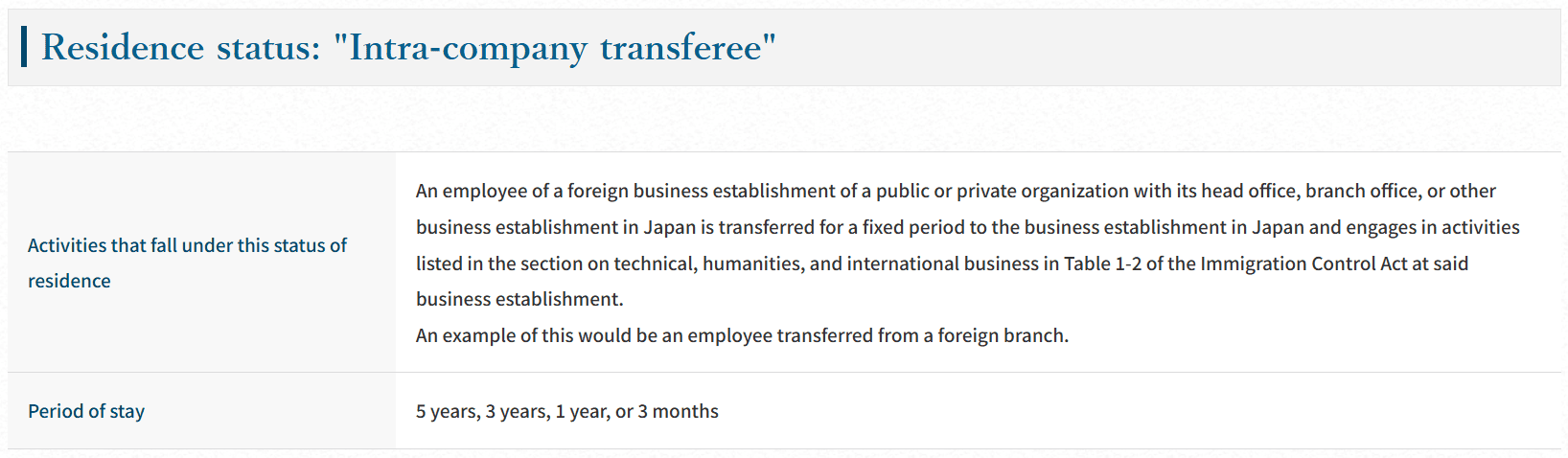
Note: In cases where a parent company overseas sends personnel to work at a subsidiary in Japan in a professional/technical position (not a managerial role), the company may consider applying for an Intra-company Transferee Visa.
Conversely, if personnel are seconded to directly manage a subsidiary company (for example, as a director/member of the board of directors), they must apply for a Business/Management Visa (経営・管理) and cannot use this type of visa. The two types of visas have completely different conditions and approval processes.
3.3 Preparing a legally compliant business office
One of the mandatory requirements when establishing a company in Japan is to have legal head office address (The location of the store) to register with the Japanese Legal Affairs Bureau. However, the choice of the type of Japanese office should be considered based on the business objectives and visa plan of the company.
Some common office models include:
- Traditional Office
- Serviced Office
- Coworking Space
- Virtual Office
In particular, businesses need to pay special attention to the following:
- If you're only setting up a company for regular business purposes, several flexible models might be worth considering.
- If you need to apply for a Business/Management Visa or a specific industry license, your office will need to meet stricter standards.
For example, a human resources agency needs a space that ensures privacy when interviewing candidates, or a travel agency may need to meet specific requirements according to travel industry regulations. Therefore, choosing an office space from the outset should be aligned with the company's long-term development plan.
3.4 Company Seal (Hanko)
The company seal still plays an important role in Japanese business culture. This is in accordance with the reform of commercial registration procedures by the Japanese Ministry of Justice. since 2021Businesses are no longer required to submit a company seal when registering online.
However, the official seal (代表印) is still commonly used in many important transactions such as signing contracts with partners, dealing with banks, carrying out administrative procedures, etc. Therefore, businesses should still prepare a seal system immediately after establishing a company in Japan.
3.5 Opening a business bank account in Japan
Opening a business bank account in Japan is one of the crucial but often overlooked steps when setting up a company in Japan.
In fact, Japanese banks often have quite strict due diligence processes for newly established companies, especially businesses such as:
- Represented by foreigners.
- No history of operation
- Revenue source or customer has not been proven.
The bank may request the following from the business:
- Company registration documents
- Business plan
- Information about planned activities
- Contract or proof of transaction
- Information about the physical office
The review process can take anywhere from a few weeks to several months, depending on the case.
To increase the chances of approval, businesses should prepare: complete legal documents, a clear business plan, a physical office address, and a transparent explanation of their business model. In particular, using a virtual office may make the bank account verification process more difficult.
3.6 Registering for tax and social insurance after company establishment
After completing the company registration at the Department of Legal Affairs, businesses need to carry out the following mandatory administrative procedures:
- Submit the application for the establishment of a legal entity (法人設立届出書) to the local tax office (税務署) that manages the area where the company's headquarters are located.
- Registering employees for social insurance, health insurance, and retirement insurance is mandatory as soon as you have permanent employees, especially important for industries with mandatory recruitment requirements such as Business/Management visas or employment referral permits.
- Register for labor insurance if your business employs workers.
In general, opening an agency in Japan is not simply a matter of registering a legal entity; it requires comprehensive preparation including: choosing the type of business entity, visa planning, office space, finances, banking, taxes, and legal requirements specific to each industry.
4. How does GLA support businesses in setting up agency companies in Japan?
Opening an agency in Japan offers many opportunities to access a large market with diverse service needs. However, each field, such as... tourism, IT, marketing, human resources, or business consulting They all have their own legal requirements and operating conditions.
Therefore, businesses need to prepare thoroughly right from the planning stage to ensure a smooth establishment and operation process.
With experience supporting businesses in expanding their operations in Japan, GLA provides a comprehensive company formation service, accompanying businesses from the preparation stage to the company's operation, specifically:
- Business model consulting and Types of businesses in Japan (KK or GK) suitable for investment objectives.
- Support set up company in japanThis includes preparing the necessary documents and carrying out the procedures for registering the legal entity.
- We provide legal advice for each agency sector, including those requiring licenses or specific business conditions.
- We assist with opening business bank accounts and handling post-establishment procedures such as tax, accounting, insurance, and labor matters.
- We provide support throughout the operational and expansion process, helping businesses comply with legal regulations and achieve sustainable growth in the Japanese market.
With a team deeply familiar with the business environment and legal regulations in Japan, GLA is committed to providing solutions tailored to each business's needs, optimizing implementation time, minimizing legal risks, and creating a solid foundation for long-term business operations.
5. Frequently Asked Questions about Running an Agency in Japan
1. How can I find my first customers/partners in the Japanese market?
To find their first customers or partners in Japan, businesses should combine networking channels supported by reputable organizations with face-to-face meetings at industry events and trade fairs.
Leverage business networking organizations and platforms:
- Connect through JETRO (Japan External Trade Organization) and the J-Bridge program to access Japanese businesses that match your business field.
- Leveraging J-GoodTech, a platform connecting Japanese small and medium-sized enterprises (SMEs) with international partners.
- Join chambers of commerce and foreign business associations in Japan, such as ACCJ or EBC, to expand your network and seek opportunities for collaboration.
Actively participate in trade fairs and business events:
- Attend specialized trade fairs such as CEATEC, FOODEX JAPAN, etc., to meet potential customers and partners in person. For the Japanese market, face-to-face meetings can help businesses build credibility and trust more effectively than simply contacting them via email.
- Attending just once isn't enough. Maintain a presence at events, proactively follow up, and build long-term relationships to gradually establish a business network in Japan.
2. Is it mandatory to have a Japanese representative when opening an agency in Japan?
Not mandatory. According to current regulations of the Japanese Ministry of Justice (as of 2015), foreigners can hold the position of Representative Director (代表取締役 – Daihyō Torishimariyaku) of a Japanese company of the Kabushiki Kaisha (KK) or Godo Kaisha (GK) type without residing in Japan or holding Japanese citizenship.
However, businesses need to be aware of two points:
- If opened as a branch office instead of establishing a legally registered entity (KK/GK), the aforementioned exemption does not apply; in this case, at least one representative residing in Japan is still required.
- In fact, although not legally required, many businesses still need someone present in Japan to facilitate practical operational procedures such as opening bank accounts and signing office lease agreements, as banks/landlords in Japan often prefer working with representatives residing in the country.
If the representative wishes to live and manage the company directly in Japan, the representative needs to apply for a Business Manager Visa in Japan.
3. What is the average time it takes to register an agency in Japan?
Typically, the process of registering a company in Japan takes about 3-6 weeks, depending on:
- Choose your preferred business type (KK or GK).
- Level of completeness of the application.
- Preparing the office address.
- The process of opening a bank account.
- The specific legal requirements of each profession.
For agencies operating in fields that don't require specialized licenses, such as IT, Marketing, or Consulting, the implementation time is usually faster.
Meanwhile, sectors such as tourism or human resources may take longer due to the need to go through separate business licensing procedures after company formation.
4. Which agency sector makes it easiest to obtain a Business Manager Visa?
No single profession is prioritized for Business/Management visas over others.
Japanese regulatory agencies primarily base their assessments on: feasibility of the business planpractical operational capabilities and the extent to which visa requirements are met.
However, in reality, fields such as IT/software, digital marketing, and business consulting often make it easier to build a business profile because:
- Initial operating costs are relatively flexible.
- It doesn't require many specialized licenses.
- A clear revenue model can be demonstrated.
The important thing is not the industry name, but what the business needs to demonstrate:
- They have a physical business office.
- There is a viable business plan.
- There is sufficient funding.
- It has the potential to generate revenue in Japan.
5. How much capital is needed to start a job placement service business in Japan?
To operate a paid job placement service in Japan (有料職業紹介事業), businesses need to meet the financial requirements as stipulated by regulations.
Some basic requirements include:
- Minimum net worth of 5 million yen per office.
- There must be a minimum of 1,5 million yen in cash or bank deposits in the company's name.
- An additional 600.000 yen will be added for each additional office.
In addition to capital requirements, businesses also need:
- Applying for a business license to operate an employment agency.
- Appointing a person in charge of job placement (職業紹介責任者).
- Meets standards for office operations and candidate information management.
If a business wants to implement a labor dispatch model (労働者派遣), it needs to apply for a separate license as required by regulations.
 Highlights
- Japan is a potential market for the agency model, thanks to foreign investment reaching 61,2 trillion yen by the end of 2025 and a community of 681.100 Vietnamese people creating a bridging advantage for Vietnamese businesses.
- Among the top 5 sectors, IT, marketing, and consulting have low barriers to entry, requiring only company formation; while tourism and human resources require specialized licenses and specific financial requirements.
- The human resources sector requires a minimum net worth of 5 million yen and 1,5 million yen in cash per office, while the consulting sector, although not requiring a license, has exclusive professional boundaries for lawyers, tax consultants, certified public accountants, and administrative clerks.
- Every agency needs to prepare a common foundation, including the type of business (GK or KK), a valid office, a bank account, and a Business-Management visa with a capital of 30 million yen if the founder directly manages the business.
- Choosing the right field that matches your abilities and making thorough legal preparations from the outset are crucial factors in minimizing risks and building a sustainable business foundation in Japan.

This article was published by GLA on 18/08/2026. Copyright and accompanying content are intellectual property of GLA. All rights reserved.
This information and guidance is for general informational purposes only and is not intended as specific advice on accounting, tax, legal, or other professional matters. Legal regulations may change and application may vary depending on the specific circumstances; therefore, GLA recommends that individuals and businesses consult with professionals before making any decisions. GLA is not responsible for any damages arising from the use of this content without appropriate professional advice.


 A-Z corporate support


