

Japanese Company Incorporation Certificates: 4 Types, Issuance Process (2026)
 Japanese
 Updated on January 01
 Verified by GLA Experts
 Follow GLA on

content
- 1. What is a Japanese company incorporation certificate?
- 2. Differentiating between CRC and Certificate of Seals (CSC)
- 3. The content on the certificate varies depending on the type of business.
- 4. When is a Japanese company registration certificate used?
- 5. Four types of company registration certificates in Japan
- 6. The 3-step process for obtaining a Certificate of Incorporation in Japan
- 7. Using certificates from overseas: translation and legalization
- 8. How does GLA assist businesses in obtaining a company registration certificate in Japan?
- 9. Frequently Asked Questions about Company Incorporation Certificates in Japan

 Follow GLA on

When establishing a company in Japan, businesses need to use a Certificate of Registration Information for various procedures such as opening a bank account, handling administrative procedures, and conducting transactions with partners.
Depending on the information requiring verification, businesses can choose one of four types of Registration Information Certificates issued by the Japanese Legal Affairs Bureau.
So how do these four types of certificates differ, and which one should businesses choose?
Join GLA experts to learn about the characteristics, scope of information, and intended use of each type of document, so you can choose the right documents when operating a business in Japan.
1. What is a Japanese company incorporation certificate?
A Japanese Company Registration Certificate ("CRC") is a document certifying the registered information of a company in Japan. This document is issued by... The Legal Affairs Bureau ("LAB") of Japan It is issued after the business registration procedures are completed.
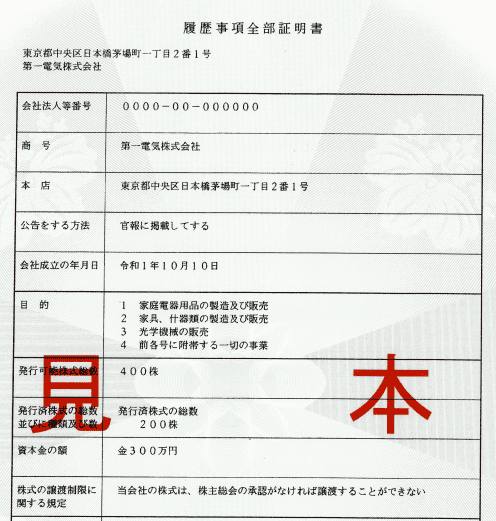
Sample Japanese Company Registration Certificate (Source: The Japanese Ministry of Justice ("MOJ"))
A Japanese company incorporation certificate is a document confirming that a business has completed its legal registration and provides official information recorded in Japan's commercial registration system.
Contents on the Certificate of Incorporation Japanese companies include:
- Company name and type of business.
- The company's registered office is in Japan.
- The registered business purpose.
- The company's registered capital.
- Information on the registered representative and management positions.
- Date of establishment and business registration.
- Other information is included in the company's business registration.
2. Differentiating between CRC and Certificate of Seals (CSC)
2.1. What is a Certificate of Seal (CSC)?
A Company Seal Certificate ("CSC") is a document issued by the Legal Affairs Bureau of Japan (LAB) confirming that a company's seal has been properly registered in Japan.
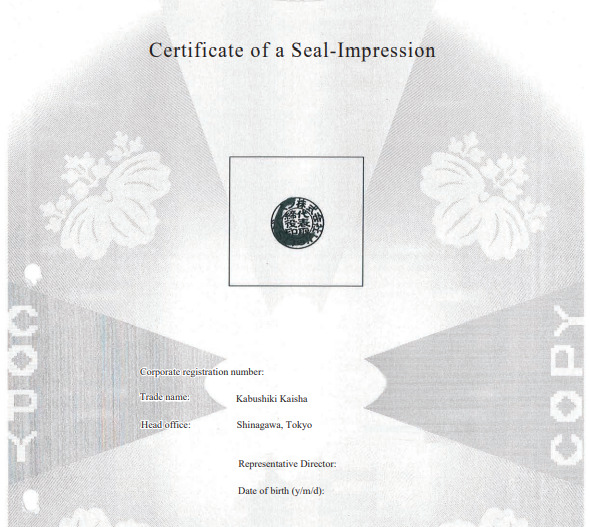
Sample Certificate of Japanese Company Seal (Source: JETRO)
Registered Company Seals ("RCS") are used in many important transactions and procedures. The accompanying seal certificate helps partners, banks, or authorities verify the validity of the seal on documents.
A registered company seal is commonly used in situations such as:
- Signing contracts and conducting transactions requires the use of a registered seal.
- Complete loan application procedures or conduct transactions with the bank as required.
- Conduct transactions involving assets that require registration of ownership, such as real estate or securities.
- Submit the application to the administrative agency or other agencies and organizations that require a seal certificate.
In transactions requiring proof that the seal used is a registered business seal, a Seal Certificate (CSC) is used to verify the information about the registered seal.
2.2. Quick Comparison Table of CRC and CSC
CRC and CSC are two different types of documents; the CRC confirms the business's registration information, while the CSC confirms that the business seal has been registered.
To help businesses determine the correct type of documents needed for each procedure, GLA's business consultants have compiled the key differences in the table below:
| Criteria | CRC | CSC |
| Purpose | Verify the business registration information. | Confirmation of registered business seal |
| Main information | Company name, address, representative, and other registration information. | Information about the registered business seal |
| Confirmation subject | Legal and registration information of the business | Validity of the registered seal |
| When needed | When you need to provide proof of company registration information, such as opening a bank account, conducting transactions with partners, or carrying out administrative procedures. | When it is necessary to prove that the seal used is a registered seal, such as in contracts, bank transactions, property transactions, and other procedures requiring a registered seal. |
3. The content on the certificate varies depending on the type of business.
A certificate of company registration in Japan displays the legal information of a business that has been registered with the Japanese Legal Affairs Bureau. The scope of information on the certificate depends on the specific company. type of business and the corresponding registration details.
- For a joint-stock company (Kabushiki Kaisha), the certificate must show information about the company, its shares, management structure, and legal representative.
- For Godo Kaisha (GK)The certificate must show information consistent with the structure of contributing members and the representative of the type of business.
- For branches of foreign companies in Japan, the business is also issued a Certificate of Registration Information after completing the registration procedures. However, the information on the branch's certificate will differ from that of a subsidiary company because a branch does not have independent legal personality in Japan.
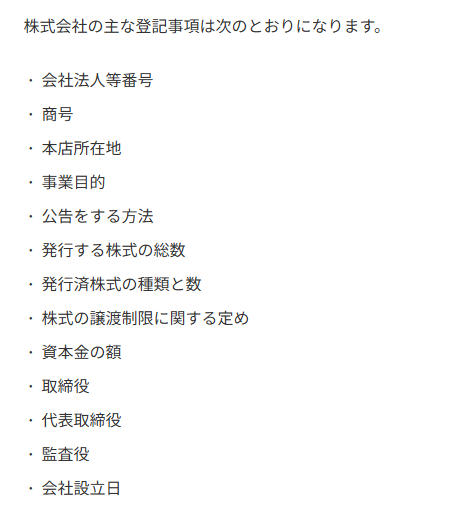
List of Information appearing in the certificate KK Company, Japan
4. When is a Japanese company registration certificate used?
A Japanese company registration certificate is used to verify the registration information and legal status of a business in procedures with banks, government agencies, investors, and partners.
Depending on the purpose, the company needs to provide the type of certificate that matches the requested content.
To help Japanese companies determine when to use a Japanese Company Incorporation Certificate and its purpose in each procedure, GLA's business consultants have compiled common scenarios in the table below:
| Use case | Uses |
| Open a business bank account. | The bank uses the certificate to verify the legal information, registered address, and the company's representative during the account opening application process. |
| Apply for or renew a Business Manager Visa. | When applying for or renewing a Business Manager Visa, the certificate is used to provide information about the business to immigration authorities. This certificate is also required when a business sponsors a work visa for a foreign employee. |
| Investor due diligence and KYC verification. | Investors, partners, landlords, or suppliers use certificates to verify business information, authenticate representatives, and complete KYC procedures before establishing a business relationship. |
| Participate in bidding and apply for business licenses. | Businesses must provide certificates in their bidding documents, business license applications, or registration procedures with government agencies when the documents require proof of business information. |
5. Four types of company registration certificates in Japan
Japanese company incorporation certificates come in four main types, distinguished by the scope of information certified, including current registration information, change history, information in closed registration files, and information about the legal representative.
The table below helps businesses quickly distinguish between the four types of Registration Information Certificates and determine the appropriate certificate for their needs:
| Type of certificate | main content | When to choose? |
| Current Information Certificate (現在事項証明書) | Displays the business's currently valid registration information at the time of issuance. | Proof that the company is currently operating legally (opening an account, standard KYC verification). |
| Certificate of Complete Information History (履歴事項証明書) | Show current registration information and any information that has changed or been deleted within the 3 years prior to the issuance date. | Proof of changes is required, including a history of changes (name change, change of registered office, change of legal representative within the last 3 years). |
| Certificate of Representative Information (代表者事項証明書) | Focus on the registration information of the representative, used to verify the representative status of the registered individual. | Just confirm who is authorized to sign on behalf of the other party. |
| Certificate of Closed Information (閉鎖事項証明書) | Record the registration information that has been transferred to the closed register, including old information that is no longer reflected in the current registration records. | We need to look up old information for companies that have ceased operations or changed their name/address outside the 3-year timeframe. |
1. Current Information Certificate (現在事項証明書)
Current Information Certificate (現在事項証明書) This is a document issued by the Legal Affairs Bureau of Japan (LAB), showing the currently valid registration information of the business at the time of issuance.
The current information certificate only reflects the current registration status of the business, helping relevant parties understand the legal information that is valid at the time of the search.
Current information certificates are commonly used for:
- Verify the current registration information of the business.
- Provide supporting documents when carrying out procedures with government agencies.
- Provide proof of business information to banks and partners.
- To facilitate transactions or other procedures that require confirmation of current registration status.
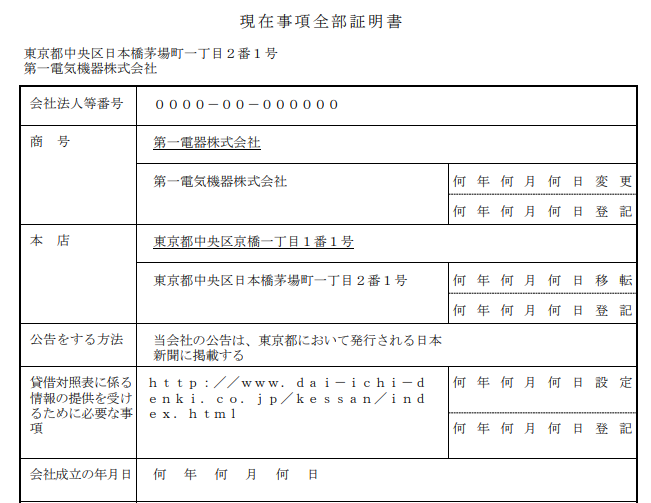
Current Information Certificate Template (Source: Ministry of Justice of Japan (MOJ))
2. Certificate of Complete Information History (履歴事項証明書)
Certificate of Complete Information History (履歴事項証明書) This document shows the business registration details recorded in the Japanese commercial register, including the business's current registration information and any information that has been changed or deleted within the three years prior to the issuance of the certificate.
A distinctive feature of this document is its ability to retrieve the business registration history. When a registration detail is changed and the change procedure is completed, the previous information is shown in the history section of the Certificate of Complete Information History.
This document is often used when needed:
- Check the business registration change process.
- Provide proof of legal history in transactions or procedures where required.
- Compare the registration information at each stage when conducting business verification.
- Provide records to the bank, partner, or competent authority when requested, showing documentation of your registration history.
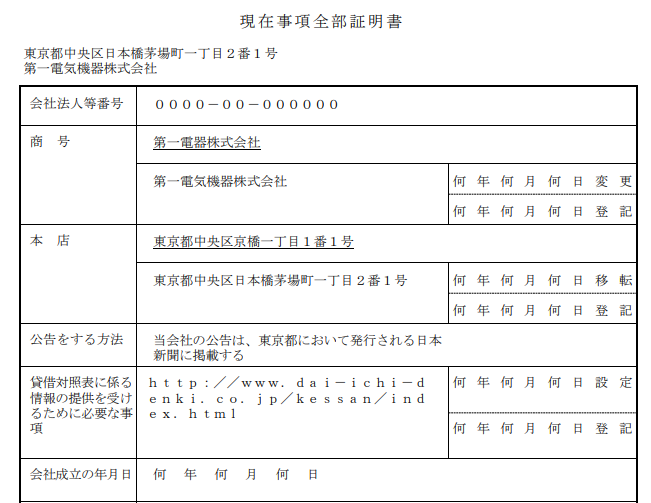
The certificate shows the company's current name and address, as well as any company names that have been used in the past. (Source: Japan's Ministry of Justice (MOJ))
3. Certificate of Representative Information (代表者事項証明書)
Certificate of Representative Information (代表者事項証明書) This document focuses on the registration information of the legal representative of the business.
A certificate of representative information is used to verify the representative status of a registered individual, especially when a business conducts transactions or procedures where the receiving party needs to verify who is authorized to represent the company.
The main contents of the certificate include:
- Business name and address: Record the company name and the address of its head office.
- Representative: Confirmation of the individual holding the representative position and the scope of their representative capacity as per the commercial filing.
- Confirmation from the registration authority: There is a certificate/confirmation from the registration authority certifying the content of the issued document.
4. Certificate of Closed Information (閉鎖事項証明書)
Certificate of Closed Information (閉鎖事項証明書) This document records the registration details that have been transferred to Japan's closed register.
A closed information certificate allows you to look up old business registration information that is no longer shown in current registration records.
To help businesses easily identify when registration information has been transferred to a closed register, GLA experts have compiled three common scenarios in the table below:
| Case | The information has been transferred to the closed register. |
| Relocating the headquarters to an area under the jurisdiction of a different registration authority. | The registration file at the new location must be closed. if a branch is already registered at that location of the business. The closed registration file retains registration information prior to the business relocating its headquarters. |
| Change name or registered office across multiple registration areas. | When the Certificate of Registration Information has a history It does not fully represent the change process. The name or headquarters, and closed registration records retain old information to supplement and demonstrate the changes in the business. |
| Dissolution and completion of liquidation. | Information contained in closed registration files can be certified by a Certificate of Closed Information. |
6. The 3-step process for obtaining a Certificate of Incorporation in Japan
After completing the company registration process in Japan, a Japanese company can request a Certificate of Incorporation to confirm the information recorded in the registration file.
The procedure is carried out in three steps, from determining the type of certificate, preparing the information, submitting the request, paying the fee, to receiving the results.
Businesses need to determine the appropriate type of certificate for their intended use and include essential information such as company name, registered address, and business registration number.
For example, a current Certificate of Information is used to verify the company's currently valid registration information.
The certificate contains a complete history of relevant information, useful for checking even previously changed registration details.
Applicants can choose one of three methods to obtain a Japanese company registration certificate. The method used will depend on the applicant's preference. Application form for a Certificate Registration information and related certificates as required.
- In person: submit your application at the registration office (LAB).
- By mail: Send your application, fee, and a postage-stamped envelope to receive your results by mail.
- Online: Submit your request through the Japanese Ministry of Justice's Online Registration and Submission System.
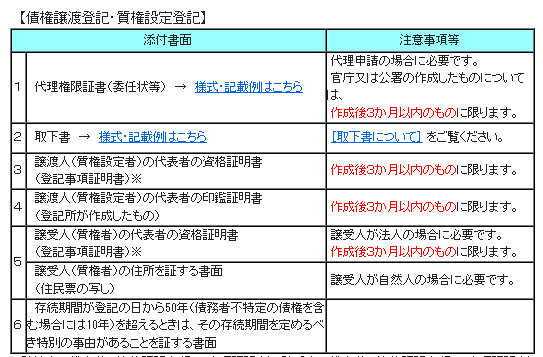
Application form for obtaining a Certificate of Company Registration in Japan
After submitting the request, the applicant pays the fee using their chosen method. The fee ranges from... 490–600 yen/paper.
After the request is processed, the applicant receives the Certificate using their chosen method:
- Received at the counter: Certificates are usually issued in about 10–15 minutesHowever, the actual time may vary depending on the number of people transacting at the counter.
- Receiving by mail: The time it takes to receive the document depends on the processing time of the request and the postal service's delivery time.
- For online requests: If submitted Requests after 17:15The system will accept applications starting at 8:30 AM on the next business day.
7. Using certificates from overseas: translation and legalization
When using a Japanese company registration certificate overseas, businesses typically need to prepare translations and certifications/legalizations of the documents as required by the receiving agency or organization. The processing method depends on the country where the documents are used and the purpose of use.
7.1. In case an English version is required
A certificate of company registration information in Japan is issued. Japanese language certificate.
Therefore, when using the certificate abroad, if the agency, bank, or partner requires documents in English, the Japanese company needs to prepare them. English translation and carry out the relevant certification procedures as required by the receiving party. The business can Follow these steps:
- Please provide the original Japanese version of the Company Registration Information Certificate.
- Translate the certificate into English as required by the receiving agency or organization.
- Notarize or certify the translation if requested by the recipient.
- Obtain an apostille or consular certification, depending on the regulations of the receiving country and agency.
7.2. In cases where a Vietnamese version is required for application submission in Vietnam.
11/09/2026Japanese official documents falling under the Apostille Convention can be used in Vietnam after being certified by Apostille, replacing the previous consular legalization procedure.
If the Japanese company registration certificate is not in Vietnamese, the business must include a Vietnamese translation that is notarized or certified in accordance with Vietnamese law.
Businesses should check the requirements of the receiving agency before preparing translations to ensure the documents are accepted. The basic process includes:
- Please provide the original Japanese version of the Company Registration Information Certificate.
- Obtain an Apostille certificate from the competent authority in Japan if the document falls within the scope of the Convention.
- Translate documents into Vietnamese and have the translation notarized or certified according to regulations.
- Submit the documents along with the Apostille and its Vietnamese translation to the receiving agency in Vietnam.
For documents not covered by the Apostille Convention, consular legalization procedures may still be applicable. In this case, businesses must follow current regulations and the specific requirements of the receiving authority.
GLA assists individuals and businesses in preparing and carrying out procedures related to certification and consular legalization of Japanese company registration certificates and business documents, making the process of completing the application convenient and compliant with the requirements of the receiving agency.
8. How does GLA assist businesses in obtaining a company registration certificate in Japan?
A Japanese company incorporation certificate is an important document for businesses to verify their registration information after completing the incorporation process.
To get a company up and running, businesses also need to complete post-establishment procedures such as opening a bank account and fulfilling compliance obligations. GLA supports businesses from company formation in Japan to obtaining the Japanese Certificate of Incorporation and post-establishment operations.
- Consult type hbusiness consistent with ownership structure and business objectivesGodo Kaisha, Kabushiki Kaisha, etc.)
- Prepare the necessary documents and coordinate the procedures for registering a business in Japan.
- We assist with the consular legalization of company registration certificates and related documents for use in Vietnam or as required by the receiving authority.
- Monitor the processing and support businesses in completing their applications, ensuring that the documents meet the requirements for their intended use.
- Providing advice on tax, accounting, labor, and insurance obligations after a company is established.
- Assistance in preparing documents and completing the account opening process. Digital Bank/Particle in Japan.
- We provide advice on business documentation and requirements related to Business Manager Visas.
9. Frequently Asked Questions about Company Incorporation Certificates in Japan
1. How long after company formation can I obtain a Japanese Certificate of Incorporation?
Businesses can request a Japanese Company Incorporation Certificate immediately after the company registration process is completed by the Japanese Legal Affairs Bureau.
While the registration process for a Japanese company is still underway, the Certificate of Registration will not be issued.
2. How long is a Japanese company registration certificate valid for?
The certificate of company registration in Japan does not have a fixed expiration date.
However, government agencies, banks, or partners often require the company to have a certificate issued for a specific period of time.
For example, some procedures of the Japanese Ministry of Justice require that a Certificate of Registration Information be issued within 3 months. This regulation only applies to the corresponding procedure and does not mean that the Certificate is only valid for 3 months.
The Japanese Ministry of Justice's requirements regarding the timeframe for a Certificate of Incorporation (Source: MY)
3. Can foreigners or their partners apply for a Japanese company registration certificate themselves?
Yes. Foreign nationals or partners not affiliated with the company can still independently request a Japanese company registration certificate, even if they are not directors, shareholders, members, or representatives of the company.
4. If the information of the Japanese company changes, does the Certificate of Registration need to be updated?
When a company changes its registered information such as its legal representative, company name, or registered office, the business must register the change. within 2 weeks since the change occurred.
However, businesses do not need to update the information directly on the issued certificate.
After the registration change procedure is completed, the new information is updated in the company's registration file. If a certificate reflecting the new information is needed, the business can request a new registration information certificate.
 Highlights
- A company registration certificate is an official document confirming the legal information of a business that has been registered with the Japanese Legal Affairs Bureau, serving banking, administrative, and business transaction procedures.
- The seal certificate confirms that the company seal has been properly registered in Japan.
- Businesses can choose from four types of registration information certificates depending on the scope of information to be verified: current information, complete information history, information about the representative, and closed information.
- Businesses can request the certificate in person, by mail, or online.
- When business information changes, the business must register the change within the prescribed timeframe and may request a new Certificate to reflect the updated information.

This article was published by GLA on 25/09/2026. Copyright and accompanying content are intellectual property of GLA. All rights reserved.
This information and guidance is for general informational purposes only and is not intended as specific advice on accounting, tax, legal, or other professional matters. Legal regulations may change and application may vary depending on the specific circumstances; therefore, GLA recommends that individuals and businesses consult with professionals before making any decisions. GLA is not responsible for any damages arising from the use of this content without appropriate professional advice.





 A-Z corporate support


