Tourism is one of Hong Kong's key economic sectors, contributing significantly to the retail, food and beverage, and accommodation industries. By 2025, Hong Kong is expected to welcome... 49,9 million visitorsThis represents a 12% increase compared to 2024. Of these, approximately 37,8 million visitors came from China and 12,1 million from other international markets, representing increases of 11% and 15% respectively.
The recovery and growth in tourist numbers creates more opportunities for businesses to tap into the tourism market in Hong Kong, especially models targeting both Chinese and international customers.
However, businesses not only need to establish a company but also meet licensing requirements if they operate within the scope of a Travel Agent Business.
In this article, GLA experts will share details about the conditions, procedures, and processes for establishing a travel company in Hong Kong, as well as the requirements for obtaining a Travel Agent License that foreign companies need to be aware of.
1. What does it mean to set up a travel company in Hong Kong?
Establishing a travel company in Hong Kong is a matter for foreign investors. Registering a business in Hong Kong to conduct business activities in the tourism sector.
Establishing a company does not automatically grant the business the right to operate a travel service. If the business falls within the scope of Travel Agent Business ("TAB") as defined by Hong Kong regulations, the business must meet the requirements and register for a Travel Agent Licence ("TAL") from the Hong Kong Travel Industry Authority ("TIA").
For investors who choose the company model, Private Limited Company It is a common way to establish a business in Hong Kong.
The Hong Kong Tourism Authority (TIA) does not limit Travel Agent License applications to any particular company type. According to the TIA, applications can be submitted in three forms:
- Company.
- Partnership company. Or
- Individuals conduct business in the form of sole proprietorships (individual carrying on business as a sole proprietor).

Three types of Travel Agent License registration in Hong Kong (Source: Hong Kong Tourism Board (TIA))
2. Why should businesses establish a travel agency in Hong Kong?
Establishing a travel company in Hong Kong offers several notable advantages for foreign investors, ranging from 100% ownership rights and a relatively simple tax system to connections with China and its diverse tourism and events ecosystem.
Below is a summary of the advantages of establishing a travel company in Hong Kong and important information for businesses to consider, compiled by GLA's business consultants:
| Advantage |
Summary |
| 100% foreign ownership and favorable tax policies. |
Foreign investors can own 100% of a company's capital.
The tax system is relatively simple, with corporate profit tax rates ranging from 8,25% to 16,5%.
|
| Advantages of connectivity between Hong Kong and China |
Its location and international transportation system are favorable for developing Hong Kong-China tours and multi-destination travel itineraries. |
| An ecosystem of international events and diverse cultural experiences. |
Sports events, arts, culture, and unique tourism products generate diverse customer groups and demand for tourism services. |
| Brand reputation and ability to connect with international partners. |
Hong Kong is an international financial and business hub, facilitating business relationships with airlines, hotels, transportation companies, event organizers, and international travel partners. |
1. 100% foreign ownership and favorable tax policies.
Hong Kong allowing foreign investors to own 100% of the capital in the company. without requiring local shareholders or partners.
The tax system in Hong Kong is relatively simple, with three main tax categories related to income and business activities.
To help businesses easily identify their tax obligations and proactively plan their finances, GLA's International Tax and Accounting Consulting experts have compiled the following list of taxes that businesses need to be aware of:
| Tax group |
Key tax rates/regulations |
| Salaries Tax |
Applicable to individual salary income, at the rate Progressive tax rate 2%–17%.
The amount of tax payable is capped at a standard two-tier tax rate: 15% for the first 5 million HKD of net income and 16% for the remainder.
|
| Profit Tax |
Profit tax in Hong Kong is applied to two groups of subjects:
- Company: The tax rate is 8,25% on the first HK$2 million of taxable profit and 16,5% on any profit exceeding HK$2 million.
- For businesses without legal personality: The tax rate is 7,5% on the first HK$2 million of taxable profit and 15% on any profit exceeding HK$2 million.
|
| Property Tax |
This applies to rental income from properties in Hong Kong.
The current tax rate is 15%. based on the net value of the taxable assets.
|
The favorable ownership structure and relatively simple tax system make it easy for foreign investors to establish and operate travel companies in Hong Kong.
For travel companies, these factors help businesses proactively organize their operations and manage costs in accordance with their operating model.
2. Advantages of connectivity between Hong Kong and China
The advantage of connectivity with China is one of the outstanding opportunities when establishing a travel company in Hong Kong. Its geographical location and international transportation system make it easy for Hong Kong companies to develop multi-destination tours between Hong Kong and China.
From September 11thChina is expanding its 240-hour visa-free transit policy, applying it to five more border crossings in Guangdong province, including two that directly connect with Hong Kong: the Hong Kong-Zhuhai-Macau Bridge and the West Kowloon Railway Station (China Government Information Portal, 2025).
This policy creates more favorable conditions for international tourists to combine visits to Hong Kong with destinations in China, thereby opening up opportunities for businesses to develop international tours and multi-destination travel itineraries.
3. An ecosystem of international events and diverse cultural experiences.
Hong Kong hosts numerous international events in sports, arts, culture, and entertainment, contributing to a steady stream of tourists year-round.
Some notable events include Hong Kong Sevens, LIV Golf Hong Kong, Art Basel Hong Kong, and Art Central, along with many other large-scale festivals and programs.

International and cultural events diversity in Hong Kong
Besides international events, tourism products related to Hong Kong's culture and cinema also attract a large number of visitors. The exhibition "Kowloon Walled City: A Cinematic Journey," which opened on May 24, 2025, has attracted more than 49,9 million visitors.
The exhibition "Yau Ma Tei Police Station: A Cinematic Journey," which opened on January 2, 2026, also received great interest, with over 11.000 tickets for January 2026 selling out within two weeks.

Yau Ma Tei Police Station Exhibition in Hong Kong
For companies operating in the tourism sector in Hong Kong, the city's diverse ecosystem of events and cultural experiences creates many different customer segments and service demands, ranging from event-based tours, cultural and arts tours, and film tours to accommodation, transportation, and experiential services.
4. Brand reputation and ability to connect with international partners.
Hong Kong is an international financial and business hub, with a thriving business environment and extensive networks connecting to numerous markets around the world.
This is a factor that helps businesses build a professional image and increase brand recognition when operating in the international tourism sector.
By establishing a travel company in Hong Kong, businesses can build commercial relationships with numerous partners in the travel service chain, such as airlines, hotels, transportation companies, event organizers, and experience providers. Businesses can also utilize their Hong Kong legal entity to sign contracts, conduct transactions, and expand their network of partners in international markets.
3. Requirements for establishing a travel company in Hong Kong
To establish a travel company in Hong Kong, investors need to meet two main sets of requirements: registration. Hong Kong company formation at the Companies Registry, and register for a Travel Agent Licence if your business falls within the scope of a travel agency.
3.1 Requirements for establishing a company in Hong Kong
For Private Limited CompanyBusinesses need to meet the following basic requirements:
- Shareholder: There is at least one shareholder.
- ManagerAt least one director must be an individual. Directors are not required to reside in Hong Kong.
- Company SecretaryThis is mandatory. If the secretary is an individual, they must be a resident of Hong Kong. If the secretary is a legal entity, the legal entity must have its registered office or principal place of business in Hong Kong. The sole director of the company cannot simultaneously hold the position of company secretary.
- Registered Office: Must be located in Hong Kong.
- Capital contribution: There is no minimum paid-up share capital requirement when establishing a company.
3.2 Requirements for registering a Travel Agency Business License in Hong Kong
A Travel Agency Business License (TAL) is a license issued by Hong Kong Tourism Board (TIA) Granting permission for businesses to conduct travel agency activities within the scope of its management in Hong Kong.
Therefore, if a company wants to operate within the scope of travel agency business (TAB), establishing a company in Hong Kong is not sufficient.
Businesses must meet licensing requirements and obtain a Travel Agency Business License (TAL) from the Hong Kong Tourism Authority (TIA) before commencing any licensed business activities.
If operating at a business location in Hong Kong that is regularly accessible to the public (local place of business), the business must also have a Business Permit for that location.
To be granted or renew a Travel Agency Business License (TAL), the business entity must meet the main requirements regarding eligibility, suitability, capital, security, authorized representatives, and licensing fees as stipulated by the TIA. Specifically, these are as follows:
| Condition |
Requirement |
| License applicant |
Businesses can choose one of the following three options:
- Company.
- Partnership company.
- Individuals conduct business in the form of sole proprietorships (individual carrying on business as a sole proprietor).
|
| Suitability |
The entity applying for a Travel Agency Business License (TAL) must Meets the fit and proper requirements as assessed by TIA..
Depending on whether the registration is for a company, a partnership, or an individual, TIA will consider relevant factors such as:
- Financial status and ability to repay.
- History of violations or convictions.
- The process of complying with regulations regarding tourism business.
- The suitability of the individuals managing and controlling business operations.
For companies, TIA also examines information related to affiliated companies and the individuals who manage or control the company.
|
| Guarantee Money |
A security deposit is a guarantee intended to ensure that a licensed travel agent fulfills its obligation to pay any financial penalties imposed by the TIA.
The entity applying for or renewing a Travel Agency Business License (TAL) must meet the guarantee requirements, except for certain cases that are exempted according to regulations.
- Security deposit amount: HK$500.000.
- Form: A bank guarantee is required, not a cash payment made directly to TIA.
- Duration: Equal to the validity period of the license plus 6 months.
- Publisher: Authorized institution under Banking Ordinance (Cap. 155).
- Guarantee form: Use the form specified by TIA.
|
| Authorized Representative |
Applicants for a Travel Agency Business License (TAL) must propose an authorized representative.
TIA will evaluate This individual's suitability level is based on regulatory requirements., include:
- Eligibility: Must not fall under any ineligible categories and must not simultaneously hold the role of authorized representative for another licensed travel agency.
- Training: Complete the training course for authorized representatives as prescribed by TIA.
- Qualifications and experience: Possess Form 5/Senior Secondary 3 or equivalent and at least 5 years of experience managing travel agency business operations, or at least 10 years of experience managing travel agency business operations.
|
| Licensing fees |
Payment required fees vary by procedure., include:
- Application fee for licensing.
- Fees for issuing or renewing licenses.
- Other related fees.
The current fee ranges from HK$160 to HK$630.
The fee for issuing or renewing a license is HK$485/month.
|

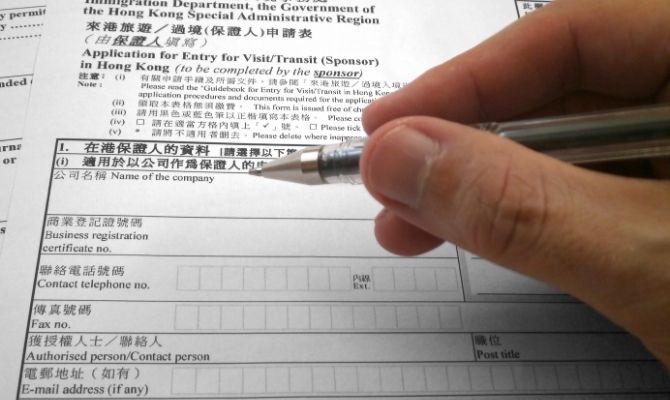
Travel Agent License Application and Renewal Form in Hong Kong for companies
4. What is a Business Permit?
A Business Permit is a permit for a travel agent who has already been granted a Travel Agency Business License (TAL) but conducts travel agency business at a business location in Hong Kong that is regularly accessible to the public.
This license is issued for each specific business location and is not a replacement for a Travel Agency Business License (TAL).
To be granted a Business Permit, a travel company in Hong Kong must:
- Possesses a valid Travel Agency Business License (TAL).
- The business location and premises are suitable for operating a travel agency business as required by TIA.
- Pay the required fees.

Regulations for renewing Business Permits by Hong Kong travel agencies.
Note: Not all travel agencies are required to have a Business Permit. If your company operates from home and the public is not regularly able to access the location, a Business Permit is not required for that location.
From date of 1 / 5 / 2026Newly issued or renewed Travel Agent Licenses and Business Permits will be issued electronically and sent via email to the licensee.
5. Activities falling within the scope of travel agent business in Hong Kong.
According to the Hong Kong Tourism Board (TIA), the travel agency business in Hong Kong comprises two main groups:
- Operating a travel agency that takes customers abroad (Outbound).
- Operating a travel agency that brings tourists to Hong Kong (Inbound).
The scope of these activities is defined in Section 4 of the Travel Industry Ordinance (Cap. 634)Entities conducting activities within the scope of travel agency business must possess a Travel Agent License.
5.1 Business of acting as a travel agency to take tourists abroad (Outbound)
Operating a travel agency that takes customers abroad (Outbound). This refers to the arrangement of travel services for itineraries departing from Hong Kong and primarily taking place outside of Hong Kong. By regulation, this activity includes:
- Arrangements for transportation will be made for journeys departing from Hong Kong and primarily taking place outside of Hong Kong.
- Arrange accommodation outside of Hong Kong for clients.
- Providing these services from outside Hong Kong but marketing and promoting them to customers in Hong Kong, either directly or through third parties.

Operating a travel agency that takes customers abroad (Outbound).
Some cases fall outside the scope of outbound travel agency business, including:
- The entity is the unit directly operating the relevant transportation vehicle.
- The entity is the operator of the relevant accommodation facility.
- Accommodation arrangements are for stays of 28 days or more.
5.2 Business of travel agency services for receiving tourists into Hong Kong (Inbound)
Inbound travel agency business in Hong Kong involves arranging travel services in Hong Kong for visitors from outside Hong Kong, including transportation, accommodation, sightseeing, dining, shopping, and related domestic transportation.
Specifically, activities falling within this scope include:
- Arrange transportation for visitors to Hong Kong.
- Arrange accommodation in Hong Kong.
- Arrange sightseeing tours at tourist attractions and landmarks in Hong Kong.
- Arrange meals at restaurants or other food service establishments.
- Arrange a shopping trip.
- Arrange domestic transportation related to sightseeing, dining, and shopping activities.

Travel agency business bringing tourists to Hong Kong (Inbound) (Source: Hong Kong Tourism Board (TIA))
Activities in the air are not considered inbound travel agency business if the entity directly operates transportation, accommodation facilities, or directly provides related sightseeing, dining, shopping, and transportation services.
6. The process of establishing a travel company in Hong Kong
The process of establishing a travel agency in Hong Kong typically involves six main steps: choosing a business model and preparing the necessary documents, registering the company, applying for a Travel Agent Licence (TAL) if required, applying for a Business Permit if applicable, opening a bank account, and fulfilling post-establishment compliance obligations.
Determine the business model and prepare the necessary documents for company incorporation.
First, the business needs to determine the type of company and prepare the necessary information to Registered in Hong Kong. For Private Limited CompanyBusinesses need to prepare basic information such as:
- Company: Choose and verify a company name that complies with regulations in Hong Kong.
- Shareholders and directors: Determine the ownership structure and information of shareholders and directors.
- Company Secretary: Appoint a company secretary who meets the required regulations.
- Registered office: It has its registered office address in Hong Kong.
- Share capital: Determine the appropriate capital structure and level of equity to meet the business's operational needs.
For companies planning to operate in the tourism sector, businesses also need to define their scope of operations to assess whether they are required to register. Travel Agency Business License (TAL) or not.
Register a company in Hong Kong
After completing the preparation of information and documents, the business proceeds with the company registration procedure at the Companies Registry.
The basic process includes:
- Preparation and submission of documents: Complete the required incorporation documents and submit them to the competent authority.
- Processing the application: Companies Registry receives and reviews the registration application.
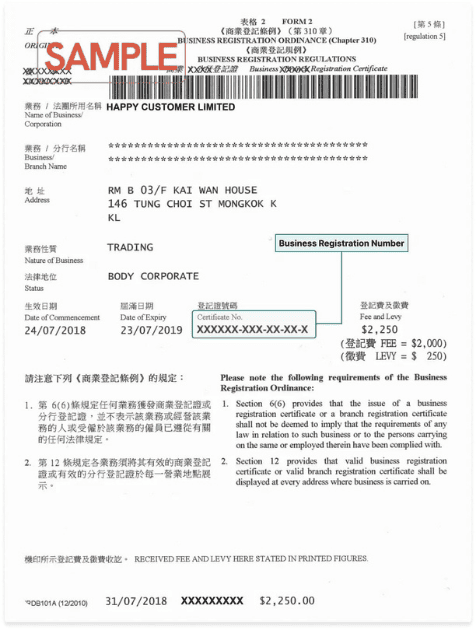
- Receiving incorporation documents: Once the application is approved, the business receives a Certificate of Incorporation and a Business Registration Certificate ("BRC").
Completing this procedure allows the business to be officially established in Hong Kong. However, CI and BRC do not replace specialized licenses if the tourism business falls within the scope requiring licensing.
GLA assists businesses in completing all procedures. Registered in Hong Kong From A to Z, including preparing documents, submitting applications, and tracking processing progress.
Applying for a Travel Agent License
After establishing the company, the business needs to review its planned scope of operations to determine tourism licensing requirements.
If the business falls under the scope of Travel Agent Business (TAB), the enterprise must meet the conditions and complete the procedures to obtain a Travel Agent Licence issued by the Hong Kong Tourism Authority (TIA) before commencing any licensing-related activities.
For companies, some important requirements to note when registering for TAL include:
- Minimum contributed equity capital is HK$500.000.
- HK$500.000 security deposit in the form of a bank guarantee.
- Propose an authorized representative who meets TIA requirements.
- Meets the requirements for fit and proper and other licensing conditions.
Apply for a Business Location License if applicable.
If a business conducts travel agency operations at a location in Hong Kong that is frequently accessible to the public, it needs to apply for a Business Permit for that location.
A Business Permit is issued separately for each business location and does not replace a Travel Agent License. Businesses need to have a valid TAL, meet the business location requirements, and pay the required fees.
Note: Not all travel agencies are required to have a Business Permit. Businesses that operate from home and where the public does not frequently access the location may not be required to obtain a location permit.
Open a bank account and get your business up and running.
After completing the necessary establishment procedures and obtaining the required licenses, the business can proceed with the tasks to put its operations into operation, including:
- Prepare bank documents.Provide the business documents and related materials as requested by the bank.
- Open a bank accountRegister for a business bank account that suits your transaction needs.
- Implement activitiesComplete all applicable permits before engaging in activities within the scope of your Travel Agency Business.
GLA assists businesses in preparing documents and completing procedures for opening bank accounts in Hong Kong, providing them with the basis to conduct transactions to support their business operations.
Fulfilling compliance obligations after establishment
Once operational, the business needs to maintain compliance with Hong Kong regulations, including: Submit annual returns, maintain business records, and fulfill tax obligations. as per regulations.
For travel agency businesses, it is necessary to continue meeting TIA requirements throughout their operation, including maintaining a Travel Agent Licence, bank guarantees, and fulfilling obligations related to the Travel Industry Compensation Fund (TICF) if applicable.
7. How does GLA assist in establishing a travel company in Hong Kong?
GLA provides comprehensive consulting and support services for businesses throughout the process of establishing a travel company in Hong Kong, helping them prepare all necessary documents and complete the required procedures to operate their business in accordance with regulations.
Depending on the business model and scope, GLA supports businesses in the following ways:
- Advisory type of businessConditions and procedures for establishing a travel company in Hong Kong;
- Prepare and submit the business registration application;
- Providing advice on the necessary licenses for tourism business operations;
- Assistance with registering for a Travel Agency Business License (TAL) if the business's activities fall within the scope of travel agency business (TAB);
- Assisting in preparing documents and carrying out procedures related to obtaining permits;
- Providing advice on necessary compliance requirements for businesses operating in Hong Kong: Tax declaration and accounting for a Hong Kong company., Open a bank account for the company. Hong Kong, etc.
8. Frequently Asked Questions about Setting Up a Travel Agency in Hong Kong
1. Do I need a visa to set up a travel company in Hong Kong?
Not necessarily. Foreign nationals who are not residents of Hong Kong can still establish companies in Hong Kong without needing to be residents there.
However, The right to establish a company and the right to enter the country to work or operate a business are two different issues.If investors wish to directly participate in business operations in Hong Kong, they need to... visa application, entry permit The scene is appropriate.
One of the applicable categories is entry for investment as entrepreneurs under the General Employment Policy ("GEP").
The Immigration Department reviews entry permits based on the specific conditions of each application.
2. If the company does not operate within the scope of travel agency business, does it still need to register for a Travel Agent License?
A company does not need to register for a Travel Agency Business License (TAL) if its actual operations do not fall within the scope of travel agency business (TAB) as defined in Section 4 of the Travel Industry Ordinance (Cap. 634).
Whether a company needs to register for a Travel Agency Business License (TAL) is determined based on its actual business operations, not solely on the registered business sector.
3. What are the costs involved in setting up a travel company in Hong Kong?
The costs of setting up a travel agency in Hong Kong typically include company registration fees, business registration fees, and travel licensing fees if the activities fall within the scope requiring licensing. Fees related to travel-related activities include:
- Application fee for Travel Agent License.
- Fees for issuing or renewing a Travel Agent License.
- A fee will be charged for a copy of the Travel Agent License if needed.
- There is a fee for amending information on your Travel Agent License if there are any changes.
- Fees apply for a Business Permit and fees apply for issuing or renewing the Business Permit, depending on the case.
- Fees may apply for issuing copies or amending information on the Business Permit.
4. While awaiting the issuance of the Travel Agent License, is the company allowed to accept customers?
No. If the business falls within the scope of travel agent business, the company must obtain a Travel Agent License before conducting any activities within its licensed scope.
Company formation and obtaining a Travel Agent License are two separate procedures. Businesses can complete company registration first, but company formation does not automatically mean permission to operate as a travel agency.
- Establishing a travel agency in Hong Kong does not automatically grant permission to conduct travel business; activities falling under the scope of Travel Agent Business (TAB) require a Travel Agent Licence (TAL) issued by TIA.
- Travel companies in Hong Kong can leverage advantages such as 100% ownership, favorable tax policies, and connections to international tourism markets and ecosystems.
- Businesses need to meet TIA's financial, guarantee, and related requirements to be granted a TAL.
- A business permit needs to be registered if the business operates at a location that is regularly accessible to the public.
- TAB encompasses both outbound and inbound activities; businesses are only permitted to conduct activities within the scope of TAB after obtaining a TAL (Targeted Activity License).













 A-Z corporate support


